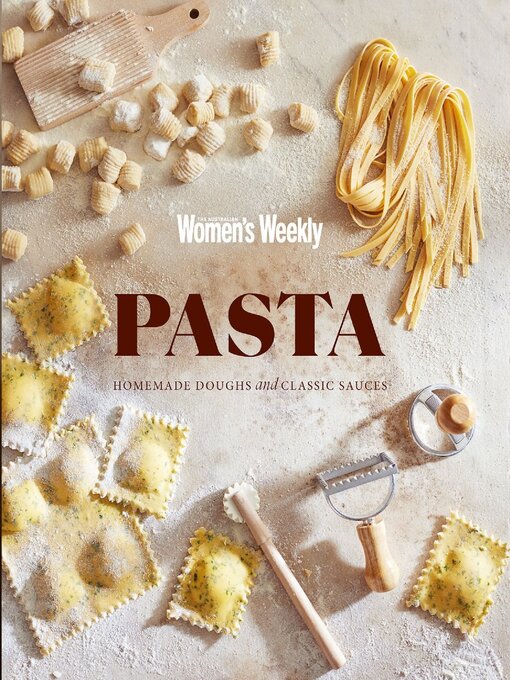
Making fresh pasta at home is simpler than you might think and the process is incredibly satisfying. Basic pasta dough can be used in its sheet form (lasagne, cannelloni), filled and folded (ravioli, tortellini) or cut into lengths (papperdelle, linguine). Of course, there are numerous other shapes available, both fresh and dried. And when paired with the perfect sauce, it’s hardly surprising that pasta is such a favourite around the world.
PASTA • HOMEMADE DOUGHS and CLASSIC SAUCES
THE ART OF PASTA • Transform a simple dough made of flour and eggs into thick golden ribbons, long silky strands or little flavour-packed pockets that are as much the failsafe crowd-pleaser as an extravagant dinner party centrepiece. Immerse yourself in the age-old Italian process of pasta making or rehydrate the trusty dried variety in minutes.
BASIC EQUIPMENT
BASIC SAUCES • Build and master your pasta repertoire by making these eight essential sauces from scratch. Tomato and pesto-based sauces can be made in advance and stored in the fridge for a week or frozen for up to 6 months. Make creamy sauces on the day of serving.
MEAT • These sauces are often best suited to long strands of pasta that can hold up to the rich texture and flavour of the meat. Take your pick from a range of melt-in-your-mouth ragùs or quickly toss together one of the cured pork classics.
THE DELICATESSEN • Curing meats has long been an art form in Italy as a way to prolong shelf life and develop immense amounts of savoury flavour.
VEGETABLES • Celebrate what the seasons produce, from sun-ripened tomatoes bursting with summer, to fresh, nutty broad beans of spring, to create the best harvest-driven sauces and pasta fillings.
THE MARKET • Italian cuisine always embraces the harvest, making the most of a seasonal glut by using the produce in a variety of recipes or preserving to enjoy year round.
THE CHEESE SHOP • Creators of some of the most famous cheeses, Italy’s success comes from each region’s intricate craft, perfected over generations using different methods and milks.
SEAFOOD • To capture the flavours of Italian coastal regions, pair seafood with what grows best by the water: lemons, chillies and the best extra virgin olive oil.
THE FISH MARKET • With much of the country bordering the sea, it’s not surprising to find an abundance of seafood in Italian kitchens. And as Italians do, aim for locally caught and in season.
GLOSSARY
CONVERSION CHART
The Australian Women’s Weekly: Homemade Pasta Doughs & Sauces